Searching for a wild terroir
March 31, 2026
I had my first taste of Boldwin's terroir series beer, Berge, while at a musical improv show. Musical improv, if you don't know, is like regular improv but with singing and piano accompaniment. The only way to watch it is slightly slack-jawed. The beer helps.
Berge is a lager seasoned with juniper and myrica gale, two native boreal flavours. Juniper is a spice I know from my go-to ras el hanout recipe and a Martha Stewart turkey brine I use at Christmas, but Berge was my first taste of myrica gale. I picked some up at Épices de Cru in Jean-Talon Market. It smells like pepper and flowers. Last week I used it in chicken stock in place of bay laurel.
I chose the can of beer from a similar-looking lineup. I think I liked the little seal on the label. But what hit me about it is that it's so immediately recognizable as a terroir beer. It's one of the products, along with the collection of sparkling waters from Harrington, that made me curious about boreal flavours and ask: what is the terroir of Quebec?
I reached out to Boldwin and met with the creator of the beer. We sat in the tasting room at the Collectif Brassicole Ensemble, where Berge is made. He told me about the process and motioned to a large table against the wall. “That table was covered in cups, each labeled with the exact measurements of the ingredients.” He was inspired by gin, which was a passion of his, and the myrica gale his grandmother used to season her tomato sauce. Boldwin's terroir series includes a salted sour blueberry gose and a wheat beer made with Quebec wheat. Berge (French for “bank,” as in the edge of water) tastes cold and verdant. It hits you in your nose as you drink it. It makes you wonder where it came from.
Terroir is a concept extrapolated from French winemaking, and its definition is murky. The most famous example of terroir is Champagne, which asserts that the unique conditions under which the wine is produced are intrinsically connected to the place where it's made: the soil, climate, people, and culture. For this reason, Champagne can only be made in Champagne.
Amy Trubek, in Taste of Place, attempts to nail down what the elements of terroir are: culture, soil, people, agriculture, history, climate. “Taste,” she writes, “resides as a form of local knowledge.” In France, it is “often associated with racines, or roots, a person's history with a certain place…” Terroir is an expression not just of the relationship between the land and its people, but their uniqueness as well.
This is how terroir is different from “local produce.” Our supermarkets label what is locally grown with a blue fleur-de-lys. Corn, squash, strawberries, blueberries, and maple syrup were cultivated long before Cartier. French settlers survived here only because Indigenous people taught them to harvest from the forest, hunt, trap, fish, and grow these crops. Settlers subsequently imported a lot of what we call local produce today: asparagus, carrots, onions, and French leeks. Even some of the exalted boreal flavours come from abroad, like sea buckthorn and melilot.
What about spruce tips, balsam fir, wood sorrel, staghorn sumac, dune pepper, juniper berries, sweet gale, serviceberries, and wild cranberries? These are "wild" flavours, which invokes the idea that they just are in nature. Robin Wall-Kimmerer, in her epic book Braiding Sweetgrass teaches us that the gifts of nature are cultivated through attention: recognizing the role of the plant in its ecosystem, being in reciprocal relationship with it, and honoring its seasonality. If taste is a form of local knowledge, these flavours can teach us what it means to live with the land.
What terroir isn't is fixed. What it means to live with the land changes moment to moment. Berge and other boreal products aren't just a product of terroir; they're an active construction. Boldwin is telling us what boreal terroir is at the same time as they're defining it. It's less of a history lesson and more of a dream of the future. When I asked on my visit whether myrica gale would ever be as popular as, say, cardamom, the brewer was skeptical. He pointed out that there are only three places in Quebec where he could acquire the quantity of myrica gale he needed for a run of this beer—and he's bought them out. To get that much dune pepper would be prohibitively expensive. He likened it to making a saffron beer, and questioned how that might impact the environment.
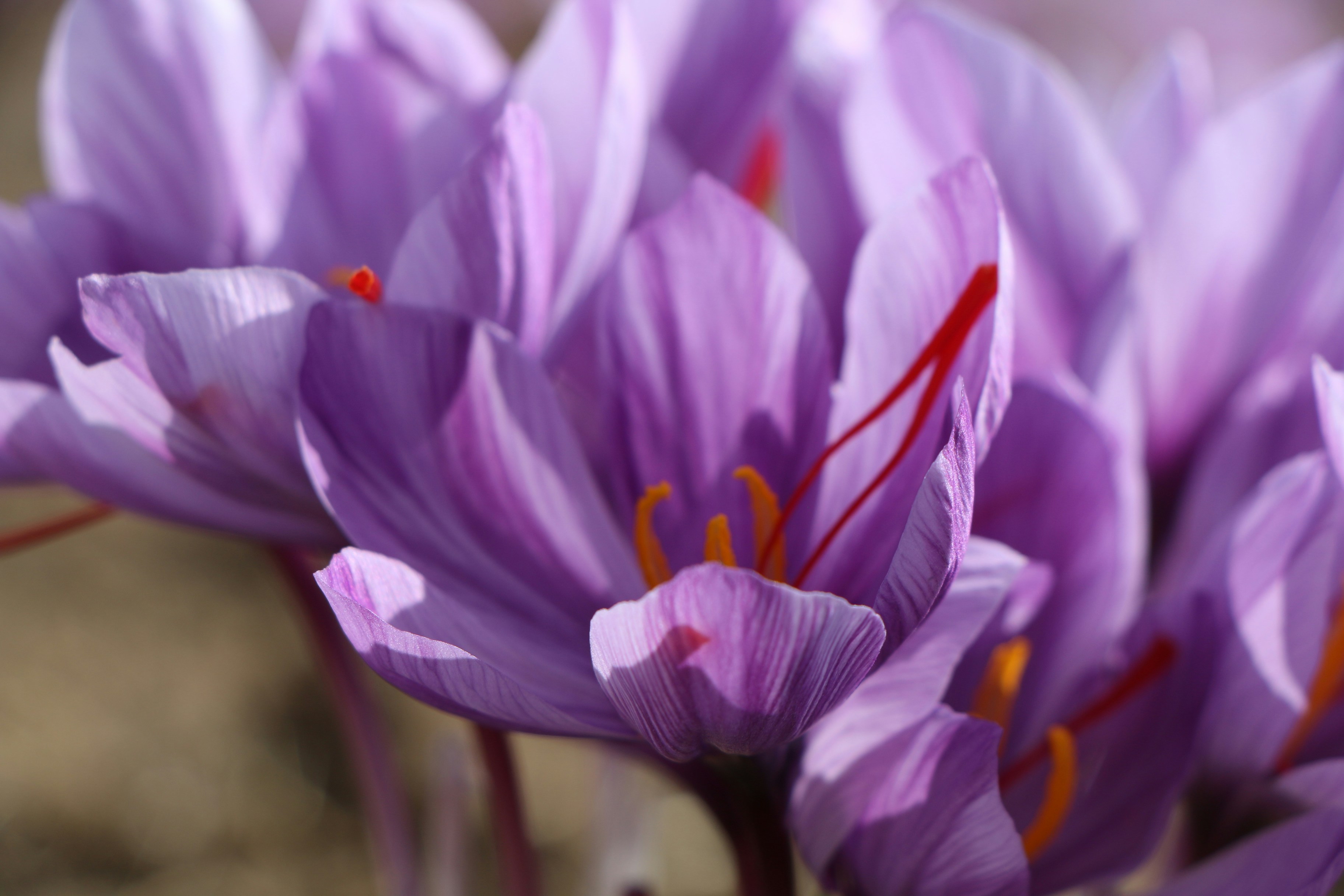
I picture the deft fingers of saffron harvesters pulling deep orange threads from violet flowers and wonder what the dune pepper harvest looks like. That I don't know—and that it's probably because there is no such thing as a dune pepper harvest—makes me restless to participate in the rituals of the boreal terroir. There are foragers, producers, and chefs still shaping the culture around it. For now, in between musical improv numbers, at least I could taste it.
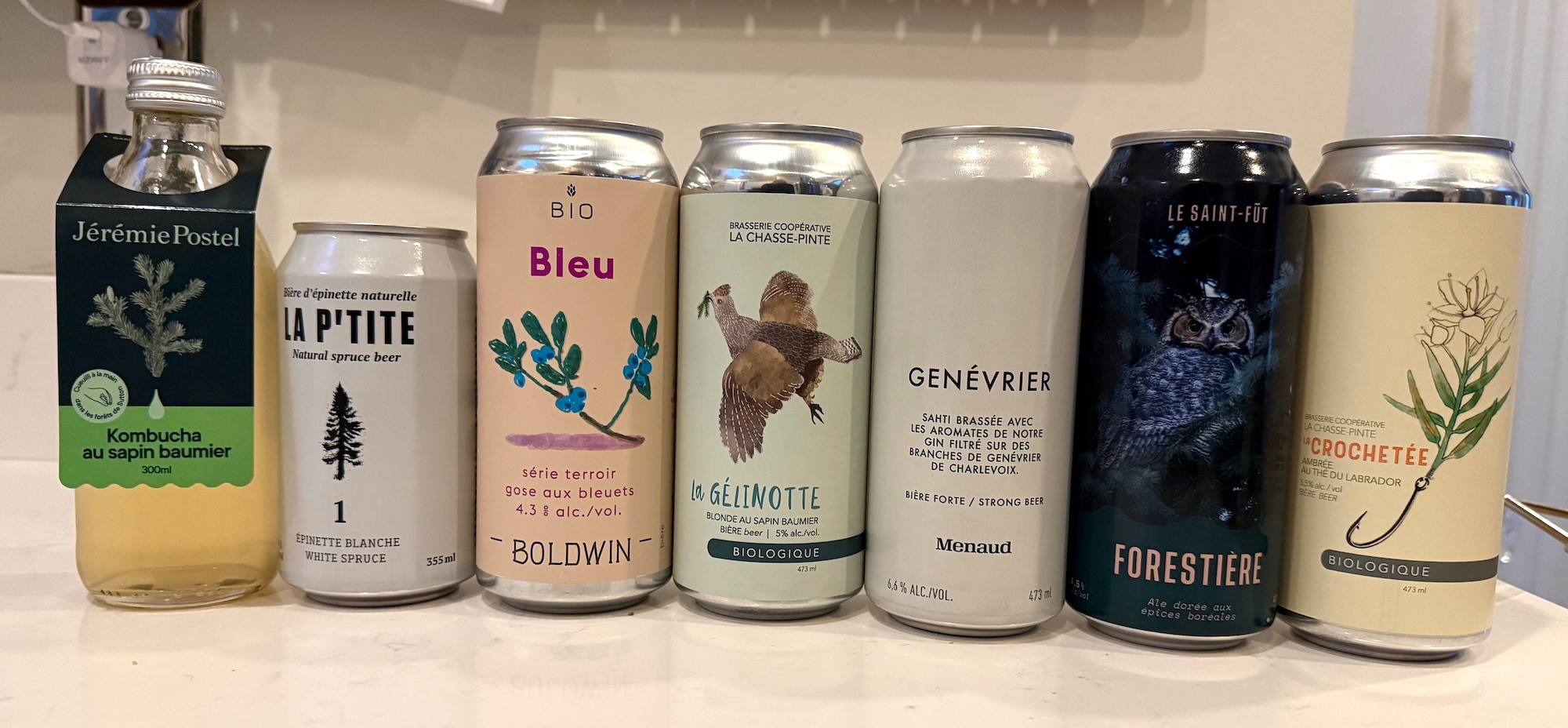
Last week I went on a boreal beer shopping spree. From left to right:
Jerémie Postel Kombucha au Sapin Baumier. Okay, not a beer. Balsam fir tends to have a thyme-like undertone which I avoid dried thyme for. It doesn't come out everywhere but I tasted it here. Otherwise, very refreshing.
La P'tit Natural spruce beer. I need need to do a whole post about Biére d'epinette because this is one of the oldest references to Boreal terroir that I found and the history is fun.
Bleu from Boldwin. This is the blueberry gose that I mentioned earlier.
La Gélinotte blonde au Sapin baumier from La Chasse Pinte
Menaud Génevrier. The Menaud Myrique is very good, and I haven't tried this yet, but it's a Juniper beer.
Le Saint-fût Forestiere. This one is interesting because it has a flavour I haven't seen a lot: Larch. Also black spruce, Labrador tea and dune pepper.
Finally, La Chrochtée which is also from La Chasse Pinte and is flavoured with Labrador tea.
Get more articles like this one in your inbox
Subscribe
Searching for a wild terroir
March 31, 2026
I had my first taste of Boldwin's terroir series beer, Berge, while at a musical improv show. Musical improv, if you don't know, is like regular improv but with singing and piano accompaniment. The only way to watch it is slightly slack-jawed. The beer helps.
Berge is a lager seasoned with juniper and myrica gale, two native boreal flavours. Juniper is a spice I know from my go-to ras el hanout recipe and a Martha Stewart turkey brine I use at Christmas, but Berge was my first taste of myrica gale. I picked some up at Épices de Cru in Jean-Talon Market. It smells like pepper and flowers. Last week I used it in chicken stock in place of bay laurel.
I chose the can of beer from a similar-looking lineup. I think I liked the little seal on the label. But what hit me about it is that it's so immediately recognizable as a terroir beer. It's one of the products, along with the collection of sparkling waters from Harrington, that made me curious about boreal flavours and ask: what is the terroir of Quebec?
I reached out to Boldwin and met with the creator of the beer. We sat in the tasting room at the Collectif Brassicole Ensemble, where Berge is made. He told me about the process and motioned to a large table against the wall. “That table was covered in cups, each labeled with the exact measurements of the ingredients.” He was inspired by gin, which was a passion of his, and the myrica gale his grandmother used to season her tomato sauce. Boldwin's terroir series includes a salted sour blueberry gose and a wheat beer made with Quebec wheat. Berge (French for “bank,” as in the edge of water) tastes cold and verdant. It hits you in your nose as you drink it. It makes you wonder where it came from.
Terroir is a concept extrapolated from French winemaking, and its definition is murky. The most famous example of terroir is Champagne, which asserts that the unique conditions under which the wine is produced are intrinsically connected to the place where it's made: the soil, climate, people, and culture. For this reason, Champagne can only be made in Champagne.
Amy Trubek, in Taste of Place, attempts to nail down what the elements of terroir are: culture, soil, people, agriculture, history, climate. “Taste,” she writes, “resides as a form of local knowledge.” In France, it is “often associated with racines, or roots, a person's history with a certain place…” Terroir is an expression not just of the relationship between the land and its people, but their uniqueness as well.
This is how terroir is different from “local produce.” Our supermarkets label what is locally grown with a blue fleur-de-lys. Corn, squash, strawberries, blueberries, and maple syrup were cultivated long before Cartier. French settlers survived here only because Indigenous people taught them to harvest from the forest, hunt, trap, fish, and grow these crops. Settlers subsequently imported a lot of what we call local produce today: asparagus, carrots, onions, and French leeks. Even some of the exalted boreal flavours come from abroad, like sea buckthorn and melilot.
What about spruce tips, balsam fir, wood sorrel, staghorn sumac, dune pepper, juniper berries, sweet gale, serviceberries, and wild cranberries? These are "wild" flavours, which invokes the idea that they just are in nature. Robin Wall-Kimmerer, in her epic book Braiding Sweetgrass teaches us that the gifts of nature are cultivated through attention: recognizing the role of the plant in its ecosystem, being in reciprocal relationship with it, and honoring its seasonality. If taste is a form of local knowledge, these flavours can teach us what it means to live with the land.
What terroir isn't is fixed. What it means to live with the land changes moment to moment. Berge and other boreal products aren't just a product of terroir; they're an active construction. Boldwin is telling us what boreal terroir is at the same time as they're defining it. It's less of a history lesson and more of a dream of the future. When I asked on my visit whether myrica gale would ever be as popular as, say, cardamom, the brewer was skeptical. He pointed out that there are only three places in Quebec where he could acquire the quantity of myrica gale he needed for a run of this beer—and he's bought them out. To get that much dune pepper would be prohibitively expensive. He likened it to making a saffron beer, and questioned how that might impact the environment.
I picture the deft fingers of saffron harvesters pulling deep orange threads from violet flowers and wonder what the dune pepper harvest looks like. That I don't know—and that it's probably because there is no such thing as a dune pepper harvest—makes me restless to participate in the rituals of the boreal terroir. There are foragers, producers, and chefs still shaping the culture around it. For now, in between musical improv numbers, at least I could taste it.
Last week I went on a boreal beer shopping spree. From left to right:
Jerémie Postel Kombucha au Sapin Baumier. Okay, not a beer. Balsam fir tends to have a thyme-like undertone which I avoid dried thyme for. It doesn't come out everywhere but I tasted it here. Otherwise, very refreshing.
La P'tit Natural spruce beer. I need need to do a whole post about Biére d'epinette because this is one of the oldest references to Boreal terroir that I found and the history is fun.
Bleu from Boldwin. This is the blueberry gose that I mentioned earlier.
La Gélinotte blonde au Sapin baumier from La Chasse Pinte
Menaud Génevrier. The Menaud Myrique is very good, and I haven't tried this yet, but it's a Juniper beer.
Le Saint-fût Forestiere. This one is interesting because it has a flavour I haven't seen a lot: Larch. Also black spruce, Labrador tea and dune pepper.
Finally, La Chrochtée which is also from La Chasse Pinte and is flavoured with Labrador tea.
Get more articles like this one in your inbox
Subscribe
Searching for a wild terroir
March 31, 2026
I had my first taste of Boldwin's terroir series beer, Berge, while at a musical improv show. Musical improv, if you don't know, is like regular improv but with singing and piano accompaniment. The only way to watch it is slightly slack-jawed. The beer helps.
Berge is a lager seasoned with juniper and myrica gale, two native boreal flavours. Juniper is a spice I know from my go-to ras el hanout recipe and a Martha Stewart turkey brine I use at Christmas, but Berge was my first taste of myrica gale. I picked some up at Épices de Cru in Jean-Talon Market. It smells like pepper and flowers. Last week I used it in chicken stock in place of bay laurel.
I chose the can of beer from a similar-looking lineup. I think I liked the little seal on the label. But what hit me about it is that it's so immediately recognizable as a terroir beer. It's one of the products, along with the collection of sparkling waters from Harrington, that made me curious about boreal flavours and ask: what is the terroir of Quebec?
I reached out to Boldwin and met with the creator of the beer. We sat in the tasting room at the Collectif Brassicole Ensemble, where Berge is made. He told me about the process and motioned to a large table against the wall. “That table was covered in cups, each labeled with the exact measurements of the ingredients.” He was inspired by gin, which was a passion of his, and the myrica gale his grandmother used to season her tomato sauce. Boldwin's terroir series includes a salted sour blueberry gose and a wheat beer made with Quebec wheat. Berge (French for “bank,” as in the edge of water) tastes cold and verdant. It hits you in your nose as you drink it. It makes you wonder where it came from.
Terroir is a concept extrapolated from French winemaking, and its definition is murky. The most famous example of terroir is Champagne, which asserts that the unique conditions under which the wine is produced are intrinsically connected to the place where it's made: the soil, climate, people, and culture. For this reason, Champagne can only be made in Champagne.
Amy Trubek, in Taste of Place, attempts to nail down what the elements of terroir are: culture, soil, people, agriculture, history, climate. “Taste,” she writes, “resides as a form of local knowledge.” In France, it is “often associated with racines, or roots, a person's history with a certain place…” Terroir is an expression not just of the relationship between the land and its people, but their uniqueness as well.
This is how terroir is different from “local produce.” Our supermarkets label what is locally grown with a blue fleur-de-lys. Corn, squash, strawberries, blueberries, and maple syrup were cultivated long before Cartier. French settlers survived here only because Indigenous people taught them to harvest from the forest, hunt, trap, fish, and grow these crops. Settlers subsequently imported a lot of what we call local produce today: asparagus, carrots, onions, and French leeks. Even some of the exalted boreal flavours come from abroad, like sea buckthorn and melilot.
What about spruce tips, balsam fir, wood sorrel, staghorn sumac, dune pepper, juniper berries, sweet gale, serviceberries, and wild cranberries? These are "wild" flavours, which invokes the idea that they just are in nature. Robin Wall-Kimmerer, in her epic book Braiding Sweetgrass teaches us that the gifts of nature are cultivated through attention: recognizing the role of the plant in its ecosystem, being in reciprocal relationship with it, and honoring its seasonality. If taste is a form of local knowledge, these flavours can teach us what it means to live with the land.
What terroir isn't is fixed. What it means to live with the land changes moment to moment. Berge and other boreal products aren't just a product of terroir; they're an active construction. Boldwin is telling us what boreal terroir is at the same time as they're defining it. It's less of a history lesson and more of a dream of the future. When I asked on my visit whether myrica gale would ever be as popular as, say, cardamom, the brewer was skeptical. He pointed out that there are only three places in Quebec where he could acquire the quantity of myrica gale he needed for a run of this beer—and he's bought them out. To get that much dune pepper would be prohibitively expensive. He likened it to making a saffron beer, and questioned how that might impact the environment.
I picture the deft fingers of saffron harvesters pulling deep orange threads from violet flowers and wonder what the dune pepper harvest looks like. That I don't know—and that it's probably because there is no such thing as a dune pepper harvest—makes me restless to participate in the rituals of the boreal terroir. There are foragers, producers, and chefs still shaping the culture around it. For now, in between musical improv numbers, at least I could taste it.
Last week I went on a boreal beer shopping spree. From left to right:
Jerémie Postel Kombucha au Sapin Baumier. Okay, not a beer. Balsam fir tends to have a thyme-like undertone which I avoid dried thyme for. It doesn't come out everywhere but I tasted it here. Otherwise, very refreshing.
La P'tit Natural spruce beer. I need need to do a whole post about Biére d'epinette because this is one of the oldest references to Boreal terroir that I found and the history is fun.
Bleu from Boldwin. This is the blueberry gose that I mentioned earlier.
La Gélinotte blonde au Sapin baumier from La Chasse Pinte
Menaud Génevrier. The Menaud Myrique is very good, and I haven't tried this yet, but it's a Juniper beer.
Le Saint-fût Forestiere. This one is interesting because it has a flavour I haven't seen a lot: Larch. Also black spruce, Labrador tea and dune pepper.
Finally, La Chrochtée which is also from La Chasse Pinte and is flavoured with Labrador tea.
Get more articles like this one in your inbox
Subscribe