


It tastes awesome. And it works.
February 23, 2026
On a weird and overwhelming tour of a souk in Marrakesh, I found myself sniffing a container of crystals to clear my sinuses. These were camphor: heavily mentholated crystals that you might know as an ingredient in Vicks VapoRub.
Camphoraceous flavours are more scent than taste. They are what you might call "medicinal." These are the sinus opening flavours and scents: eucalyptus, rosemary, and of course fir. You smell them through your mouth as a cool lifting and sharpening, which you can demonstrate for yourself by putting a
Fisherman's Friend in your mouth and inhaling. The lozenge itself tastes sweet, but the cool, resinous, mentholated flavour is a scent. When you breathe in while eating the lozenge you can actually feel the "flavour" travel from your mouth into your nose.
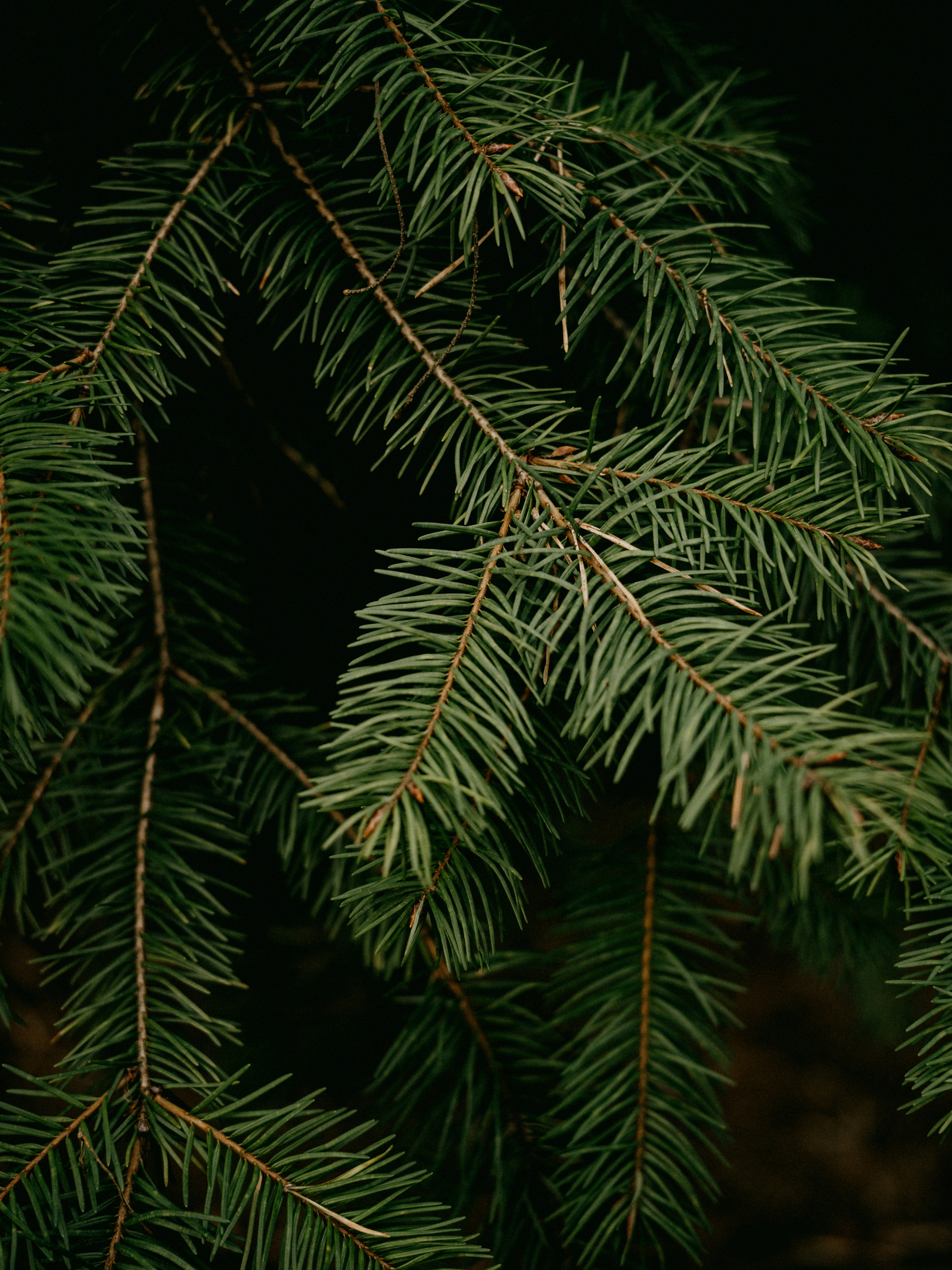
Balsam fir balm has long been used as a natural cough suppressant as well as a topical antiseptic balm. When Europeans settled in what is now Canada, they applied the name of an Old Testament cure-all to it: Balm of Gilead. Even though these two balms come from different trees, the name "Balm of Gilead" acts as a heuristic for a trusted medicinal balm with multiple uses.
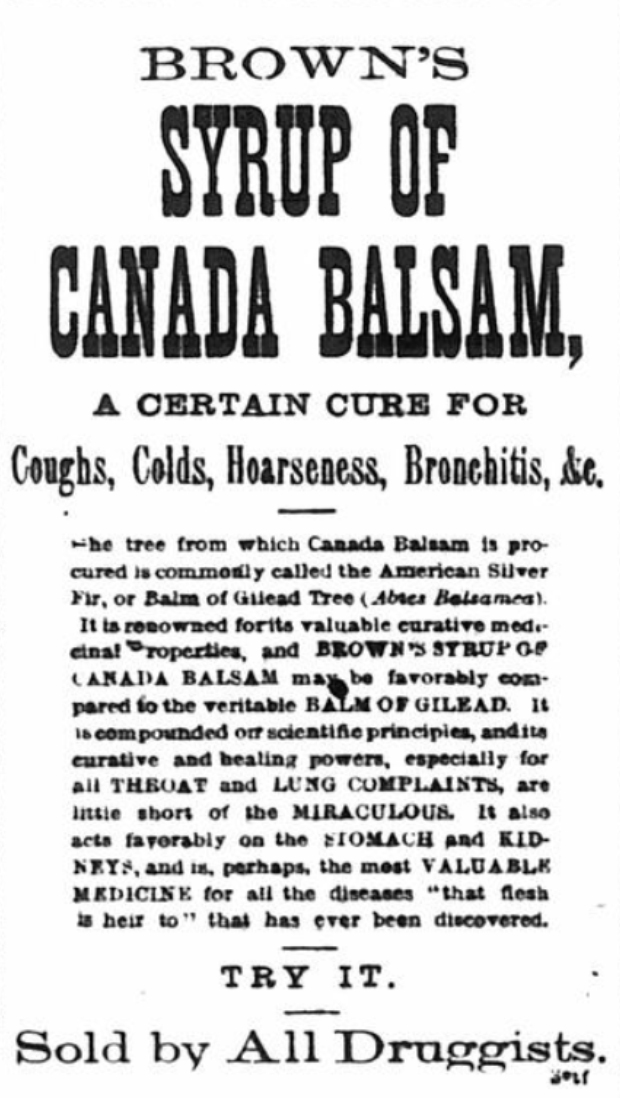
Balsam fir is still used in cough medicines. Buckley's lists Canada Balsam as an ingredient and it's implicated in the famous tagline "It tastes awful. And it works." But what's interesting is that Canada Balsam and pine needle oil are listed as non-medicinal ingredients. This implies that they are added to contribute to the "awful" taste of Buckley's. The camphoraceous flavour could be a signal to our brains that "it works."
The top notes of balsam fir may be medicinal, but the flavour is more accessible. If you've had a live Christmas tree before, you may notice that as it spends time in your home, the mentholated smell fades into the background and overall the scent becomes sweeter.
Lots of producers in Quebec create delicious sweet and savoury products using balsam fir. A friend brought some desserts from Chez Boulay the other night to our book club. Chez Boulay is a bistro in Quebec City that elevates "northern flavours". They make balsam fir macarons and spruce tip chocolate cake. Miels D'Anicet sells a vermouth from Ferme Apicole Desrochers that is flavoured with balsam fir (I haven't tried it yet!)
But cooking with fir requires a deft hand. The line between delicious and medicinal is thin, and it pairs best with flavours that enhance its sweet undertones. I say this while thoroughly enjoying unsweetened spruce sparkling water.
If you do get your hands on some of that vermouth and a bunch of very specific ingredients, here is a recipe I cribbed from a back issue of Le Soleil:
Ingredients:
7 oz (200 ml) of Vert de Miel vermouth
3.5 oz (100 ml) of verjus (green grape juice)
3.5 oz (100 ml) of Orange and rosemary syrup
0.5 oz (15 ml) ginger bitters
11 oz (330 ml) of maple water
Dehydrated lime slices
Preparation:
- Put all the ingredients in a saucepan and bring to a very light simmer. Immediately turn off the heat.
- Put the mixture into a carafe.
- Serve in coupe glasses or tea cups, garnished with dehydrated lime slices.
Get more articles like this one in your inbox
Subscribe
It tastes awesome. And it works.
February 23, 2026
On a weird and overwhelming tour of a souk in Marrakesh, I found myself sniffing a container of crystals to clear my sinuses. These were camphor: heavily mentholated crystals that you might know as an ingredient in Vicks VapoRub.
Camphoraceous flavours are more scent than taste. They are what you might call "medicinal." These are the sinus opening flavours and scents: eucalyptus, rosemary, and of course fir. You smell them through your mouth as a cool lifting and sharpening, which you can demonstrate for yourself by putting a
Fisherman's Friend in your mouth and inhaling. The lozenge itself tastes sweet, but the cool, resinous, mentholated flavour is a scent. When you breathe in while eating the lozenge you can actually feel the "flavour" travel from your mouth into your nose.
Balsam fir balm has long been used as a natural cough suppressant as well as a topical antiseptic balm. When Europeans settled in what is now Canada, they applied the name of an Old Testament cure-all to it: Balm of Gilead. Even though these two balms come from different trees, the name "Balm of Gilead" acts as a heuristic for a trusted medicinal balm with multiple uses.
Balsam fir is still used in cough medicines. Buckley's lists Canada Balsam as an ingredient and it's implicated in the famous tagline "It tastes awful. And it works." But what's interesting is that Canada Balsam and pine needle oil are listed as non-medicinal ingredients. This implies that they are added to contribute to the "awful" taste of Buckley's. The camphoraceous flavour could be a signal to our brains that "it works."
The top notes of balsam fir may be medicinal, but the flavour is more accessible. If you've had a live Christmas tree before, you may notice that as it spends time in your home, the mentholated smell fades into the background and overall the scent becomes sweeter.
Lots of producers in Quebec create delicious sweet and savoury products using balsam fir. A friend brought some desserts from Chez Boulay the other night to our book club. Chez Boulay is a bistro in Quebec City that elevates "northern flavours". They make balsam fir macarons and spruce tip chocolate cake. Miels D'Anicet sells a vermouth from Ferme Apicole Desrochers that is flavoured with balsam fir (I haven't tried it yet!)
But cooking with fir requires a deft hand. The line between delicious and medicinal is thin, and it pairs best with flavours that enhance its sweet undertones. I say this while thoroughly enjoying unsweetened spruce sparkling water.
If you do get your hands on some of that vermouth and a bunch of very specific ingredients, here is a recipe I cribbed from a back issue of Le Soleil:
Ingredients:
7 oz (200 ml) of Vert de Miel vermouth
3.5 oz (100 ml) of verjus (green grape juice)
3.5 oz (100 ml) of Orange and rosemary syrup
0.5 oz (15 ml) ginger bitters
11 oz (330 ml) of maple water
Dehydrated lime slices
Preparation:
- Put all the ingredients in a saucepan and bring to a very light simmer. Immediately turn off the heat.
- Put the mixture into a carafe.
- Serve in coupe glasses or tea cups, garnished with dehydrated lime slices.
Get more articles like this one in your inbox
Subscribe
It tastes awesome. And it works.
February 23, 2026
On a weird and overwhelming tour of a souk in Marrakesh, I found myself sniffing a container of crystals to clear my sinuses. These were camphor: heavily mentholated crystals that you might know as an ingredient in Vicks VapoRub.
Camphoraceous flavours are more scent than taste. They are what you might call "medicinal." These are the sinus opening flavours and scents: eucalyptus, rosemary, and of course fir. You smell them through your mouth as a cool lifting and sharpening, which you can demonstrate for yourself by putting a
Fisherman's Friend in your mouth and inhaling. The lozenge itself tastes sweet, but the cool, resinous, mentholated flavour is a scent. When you breathe in while eating the lozenge you can actually feel the "flavour" travel from your mouth into your nose.
Balsam fir balm has long been used as a natural cough suppressant as well as a topical antiseptic balm. When Europeans settled in what is now Canada, they applied the name of an Old Testament cure-all to it: Balm of Gilead. Even though these two balms come from different trees, the name "Balm of Gilead" acts as a heuristic for a trusted medicinal balm with multiple uses.
Balsam fir is still used in cough medicines. Buckley's lists Canada Balsam as an ingredient and it's implicated in the famous tagline "It tastes awful. And it works." But what's interesting is that Canada Balsam and pine needle oil are listed as non-medicinal ingredients. This implies that they are added to contribute to the "awful" taste of Buckley's. The camphoraceous flavour could be a signal to our brains that "it works."
The top notes of balsam fir may be medicinal, but the flavour is more accessible. If you've had a live Christmas tree before, you may notice that as it spends time in your home, the mentholated smell fades into the background and overall the scent becomes sweeter.
Lots of producers in Quebec create delicious sweet and savoury products using balsam fir. A friend brought some desserts from Chez Boulay the other night to our book club. Chez Boulay is a bistro in Quebec City that elevates "northern flavours". They make balsam fir macarons and spruce tip chocolate cake. Miels D'Anicet sells a vermouth from Ferme Apicole Desrochers that is flavoured with balsam fir (I haven't tried it yet!)
But cooking with fir requires a deft hand. The line between delicious and medicinal is thin, and it pairs best with flavours that enhance its sweet undertones. I say this while thoroughly enjoying unsweetened spruce sparkling water.
If you do get your hands on some of that vermouth and a bunch of very specific ingredients, here is a recipe I cribbed from a back issue of Le Soleil:
Ingredients:
7 oz (200 ml) of Vert de Miel vermouth
3.5 oz (100 ml) of verjus (green grape juice)
3.5 oz (100 ml) of Orange and rosemary syrup
0.5 oz (15 ml) ginger bitters
11 oz (330 ml) of maple water
Dehydrated lime slices
Preparation:
- Put all the ingredients in a saucepan and bring to a very light simmer. Immediately turn off the heat.
- Put the mixture into a carafe.
- Serve in coupe glasses or tea cups, garnished with dehydrated lime slices.
Get more articles like this one in your inbox
Subscribe